Side Sleeper Pillow vs Back Sleeper Pillow Guide: Which Is Better? (November 2026)
Pick a higher, firmer pillow for side sleeping and a lower, softer pillow for back sleeping. Loft fills the gap between your head and shoulders on your side, while back sleepers need less height to keep the neck in a neutral curve.
On this page (13 sections)
- How does pillow loft change with sleep position?
- Side sleeper pillow vs back sleeper pillow: how do they compare side by side?
- What loft does a side sleeper actually need?
- What loft works best for a back sleeper?
- How does shape help side sleepers and back sleepers?
- How does firmness change the choice?
- Which pillow suits people who switch positions at night?
- How do cooling and materials affect the choice?
- Can a leg pillow help side sleepers keep better alignment?
- Who should buy a side sleeper pillow, and who should buy a back sleeper pillow?
- How should you set up and care for your new pillow?
- What should you check on your mattress if pillow pain persists?
- Which should you choose in a side sleeper pillow vs back sleeper pillow choice?
Pick a higher, firmer pillow for side sleeping and a lower, softer pillow for back sleeping. In a side sleeper pillow vs back sleeper pillow choice, loft is the main difference, because side sleeping creates a wider gap between your head and the mattress.
Side sleepers need height to fill that gap and keep the head in line with the spine. Back sleepers need less height, since the mattress already supports the back of the head and the neck curve.
Shape matters next. A flat, adjustable pillow suits switchers, while a contour pillow suits people who want a fixed curve for the neck.
We compared the specs and features of the pillows in this guide to show how each type fits each position.
How does pillow loft change with sleep position?
Side sleepers need higher loft than back sleepers, because the shoulder pushes the head up. On your side, your shoulder width sets the height your pillow must fill.
On your back, the distance from the mattress to the back of your head is much smaller. A high pillow pushes your chin toward your chest and can bend the neck forward.
That is why a pillow that feels perfect on your side can feel too tall on your back. And a low pillow that feels fine on your back can leave your head tilted down on your side.
If you sleep in both positions, look for an adjustable pillow or a contour pillow with two heights. You can change the height when you change position, instead of forcing one height to do both jobs.
Our guide to bed pillows explains loft and fill in more detail. Read it first if you are new to pillow shopping and want a full picture before you compare types.
Side sleeper pillow vs back sleeper pillow: how do they compare side by side?
Side sleeper pillows are higher and firmer; back sleeper pillows are lower and softer. Use this table to see the main differences at a glance.
| Feature | Side sleeper pillow | Back sleeper pillow |
|---|---|---|
| Loft | Higher, often 4 to 6 in | Lower, often 3 to 4 in |
| Firmness | Firmer support for neck and shoulders | Softer or medium support |
| Shape | Flat and thick, or high contour | Flat and low, or low contour |
| Main job | Fill the shoulder gap | Support the neck curve |
| Best for | People who stay on one side | People who stay on their back |
 Best for adjustable contour height
Cozyplayer Ultra Pain Relief Cooling Pillow
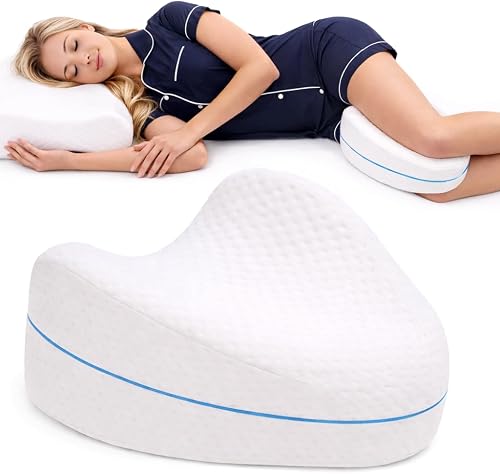 Best for side sleeper alignment
Contour Legacy Leg & Knee Foam Support
What loft does a side sleeper actually need?
Most side sleepers need a loft of 4 to 6 inches, based on shoulder width. Wider shoulders need more height to keep the head level.
If the pillow is too low, your head tilts down toward the mattress. That can bend the neck and leave your shoulder sore in the morning.
If the pillow is too high, your head tilts up. That can bend the neck the other way and push the lower shoulder down.
A good test is the side view. Your nose, chin and chest should form a straight line, with no dip or lift at the neck.
Ask someone to check, or use a phone photo.
Body size matters too. A smaller person with narrow shoulders may feel fine on a medium loft.
A larger person with broad shoulders may need the highest loft on offer.
What loft works best for a back sleeper?
Most back sleepers do best with a lower loft of 3 to 4 inches. The pillow should fill the curve under the neck without lifting the head too far.
On your back, your head already rests close to the mattress. A thin pillow is often enough to support the neck curve and keep the head from tipping back.
A contour pillow can help here, because the raised edge supports the neck while the hollow center cradles the head. That shape gives structure without a thick slab of fill.
Look for a pillow that springs back but still feels soft enough for your head. Too firm a pillow can push your head forward, while too soft a pillow can leave your neck unsupported.
If you wake with neck stiffness after back sleeping, try a slightly lower or softer pillow. If your head tips back, try a slightly higher pillow or a contour shape.
How does shape help side sleepers and back sleepers?
Shape decides where support goes, and contour shapes suit people who want a fixed neck curve. Flat pillows give you more freedom to position your head.
A traditional flat pillow lets you sleep in the center, near an edge, or turned at an angle. That freedom helps if you move a lot or switch positions.
A contour pillow has a set shape, with a dip for the head and a rise for the neck. That shape can keep your head in the same place all night, which some people like and some do not.
Side sleepers often like a contour pillow with a higher rise, because it fills the shoulder gap on the higher side. Back sleepers often like the lower rise, because it supports the neck without lifting the head much.
Try a contour pillow for a few nights before you judge it. Your head and neck need time to adapt to a fixed shape, and early discomfort may ease as you learn where to rest your head.
How does firmness change the choice?
Side sleepers usually need firmer support than back sleepers, because the pillow must hold the head up. A soft pillow can collapse under the weight of your head on your side.
On your back, the mattress carries more of your head weight, so a softer pillow can still support the neck. Many back sleepers prefer a soft or medium feel.
Firmness and loft work together. A firm pillow with low loft can still leave a side sleeper short on height.
A soft pillow with high loft can still sink too much under the head.
Adjustable pillows let you change both at once. Remove fill and the pillow gets lower and softer.
Add fill and it gets higher and firmer. That makes them a strong pick for switchers.
Memory foam pillows tend to feel firmer than down or fiber pillows at the same loft. If you prefer a softer feel, look for a blend of memory foam and fiber, or a pillow with fill you can remove.
Which pillow suits people who switch positions at night?
Switchers do best with an adjustable pillow or a two-height contour pillow. One fixed loft rarely fits both positions well.
If you start on your side and roll to your back, you need to change height when you roll. An adjustable pillow lets you do that by turning it or by refluffing it to a new shape.
A two-height contour pillow makes the change simple. Use the higher side on your side, then turn the pillow 180 degrees and use the lower side on your back.
The Coop Home Goods Original Adjustable Pillow in this guide uses a blend of cross-cut memory foam and microfiber. You can add or remove fill to change loft and firmness, and extra fill is included for fine tuning.
Our list of best pillows for side and back sleepers covers more options for people who move between positions. Read it if you rarely stay in one position all night.
How do cooling and materials affect the choice?
Warm sleepers should look for breathable materials and a cooling case, in either position. Heat can wake you, even if the loft is right.
Memory foam can hold heat, so a ventilated cover or a cooling case helps. The Cozyplayer pillow in this guide uses a cooling case with a 3D mesh design for airflow.
The Osteo pillow in this guide also uses a 3D mesh case that lets heat escape and air move through. Both pillows use memory foam as the core.
A breathable flat pillow can work too. Look for a cover made from rayon from bamboo or a similar breathable fabric, plus fill that does not trap heat.
Air the pillow for 48 hours before first use, as the makers of these contour pillows advise. That lets the foam expand and lets any new smell fade.
Can a leg pillow help side sleepers keep better alignment?
Yes, a leg pillow can help side sleepers keep the hips and knees in line. A head pillow alone does not stop the top leg from dropping forward.
When you sleep on your side, your top leg often falls in front of you. That can twist the hips and put pressure on the knees and lower back.
A leg pillow placed between the knees supports both legs and helps keep the spine in a straighter line. That can reduce pressure points for people who wake with hip or knee soreness.
Our roundup of best knee pillow for side sleepers covers more leg pillows in this style. If you add a leg pillow, you may find you need slightly less head pillow height, so test both together.
Who should buy a side sleeper pillow, and who should buy a back sleeper pillow?
Buy a side sleeper pillow if you stay on one side; buy a back sleeper pillow if you stay on your back. Your main position matters more than brand or fill type.
Side sleepers should choose higher loft, firmer support and a shape that fills the shoulder gap. Look for a pillow between 4 and 6 inches high, or a contour pillow with a high side.
Back sleepers should choose lower loft and a softer feel. Look for a pillow between 3 and 4 inches high, or a contour pillow with a low side for the neck.
Switchers should choose adjustable fill or two heights in one pillow. That gives you a way to change loft when you change position, without buying two pillows.
People with neck or back pain should be careful. A pillow may help you feel more comfortable, but it is not a treatment.
If pain lasts or gets worse, talk to a doctor.
If you have back pain and sleep on your side, our guide to the best pillow for back pain side sleeper may help you narrow the choice. It focuses on support for side sleepers with back pain.
How should you set up and care for your new pillow?
Let the pillow expand for 48 hours, then test the height for a few nights before you decide. Give your head and neck time to adapt to a new shape or loft.
Place a memory foam pillow on a flat surface after it arrives. Foam that was compressed for shipping needs time to expand to full size.
Test the pillow in your main position first. Sleep on your side or back as you usually do, and check for head tilt, neck bend or shoulder pressure.
Check the cover care label before you wash anything. Some covers are machine washable, while the foam core should not go in a washing machine.
Use a pillow protector to keep the pillow clean and help it last. Wash the protector and the cover on a regular schedule, following the care instructions for each part.
What should you check on your mattress if pillow pain persists?
Check your mattress support if neck or back soreness continues with a new pillow. A pillow can only do so much if the mattress sags under your body.
A sagging mattress can let your hips sink and change the angle of your spine. That change can affect how your head and neck rest, even with the right pillow.
Firmness matters too. People with back pain often prefer a medium-firm mattress, because it keeps the spine in a straighter line than a very soft one.
Our guides on Are Memory Foam Mattresses Bad for Your Back? The Facts and [Are Memory Foam Mattresses Good for Your Back?
A Closer Look](/are-memory-foam-mattresses-good-for-your-back/) explain how memory foam feels for back support. Read them if you think the mattress, not the pillow, may be the issue.
If pain is severe, spreads to the arms or legs, or does not ease with rest, talk to a doctor. A pillow guide is not medical advice.
Which should you choose in a side sleeper pillow vs back sleeper pillow choice?
Choose higher and firmer for side sleeping, lower and softer for back sleeping, and adjustable if you switch. Loft, shape and firmness should match your main position.
For side sleepers, our best pillows for side sleepers list gives more high-loft options to compare. For back sleepers, our best pillows for back sleepers list gives lower options with softer support.
If you want one pillow for both positions, pick the Coop adjustable pillow for fill you can change, or a two-height contour pillow like the Cozyplayer or Osteo models for a quick turn to change height.
Add a leg pillow if you sleep on your side and wake with hip, knee or lower back soreness. It works with your head pillow, not instead of it.
Frequently asked questions
Is a side sleeper pillow higher than a back sleeper pillow?
Yes, a side sleeper pillow is usually higher than a back sleeper pillow. Side sleeping needs more loft to fill the space between the shoulder and the head.
Back sleeping needs less height so the head stays in line with the spine.
Can one pillow work for both side and back sleeping?
Yes, an adjustable pillow or a contour pillow with two heights can work for both positions. You can use more fill or the higher side on your side, and less fill or the lower side on your back.
Turn the pillow to change height as needed.
What loft should a side sleeper choose?
Side sleepers often need a higher loft, often 4 to 6 inches, depending on shoulder width. People with wider shoulders usually need more height.
If your head tilts down or up, the pillow is too low or too high.
What loft should a back sleeper choose?
Back sleepers often do best with a lower loft, often 3 to 4 inches. The pillow should support the curve of the neck without pushing the head forward.
A contour pillow can help if you want more structure in that area.