Comforters & Blankets: The Complete Buying Guide
A comforter is a thick, stand-alone or duvet-covered bed covering chosen by size, fill and warmth for your season and bed. Match the dimensions to your mattress first, then pick a fill and weight you can wash and layer in your bedroom.
On this page (8 sections)
- What size comforter do you need for your bed?
- How do you pick a comforter fill for warmth and feel?
- What is the difference between a comforter, duvet insert and blanket?
- Which comforter warmth is right for each season?
- How do you choose a comforter for hot sleepers and couples?
- How do you pick a comforter that is easy to wash and keep fluffy?
- Explore comforters & blankets by topic
- What makes a comforter worth buying for your home?
A comforter is a thick, stand-alone or duvet-covered bed covering chosen by size, fill and warmth for your season and bed. Match the dimensions to your mattress first, then pick a fill and weight you can wash and layer in your bedroom.
This guide is the complete starting point for the comforters and blankets category. It explains size, fill, warmth, blanket types, care and setup so you can use the shorter guides linked throughout with confidence.
You will save time if you decide in this order: bed size and overhang, season and room temperature, fill and shell, then care. A comforter that is too small, too warm or hard to wash will not serve you well, even if the fabric feels soft in a store.
Our score weighs specs, features and buyer feedback against what you are shopping for. The four picks below show how those choices work in practice, from a king cooling comforter to wool throws for camping and the couch.
What size comforter do you need for your bed?
Size comes first because a comforter must cover the mattress top and hang over the sides enough for the way you sleep. Measure your mattress width, length and height, then add the overhang you want on each side.
A comforter sized exactly to the mattress top will look flat and will shift during sleep. Most households want at least 10 to 12 inches of overhang per side, and more on a taller mattress or a bed shared by two people.
For king beds, start with what size is a king comforter. That guide explains why king, oversized king and California king dimensions differ and why the label alone is not enough.
California king mattresses are longer and narrower than standard king mattresses. A California king comforter therefore tends to be longer and narrower, but you should still check the exact inches before you order.
If you have a king bed and want a deeper drape, compare the best comforter for king bed picks and the best oversized king comforters picks. Oversized options add width and length that help on tall mattresses and when two people share the top sheet.
Queen beds need the same check. A standard queen comforter can work, but an oversized queen gives more side coverage.
See best comforters queen size and best oversized queen comforters for that choice.
Weight matters alongside size because heavier fills pull down at the edges. A 7.9 lb king comforter drapes with more presence than a lighter piece of the same footprint, so check item weight when you compare two similar sizes.
How to measure for a comforter that fits
Measure the mattress top from edge to edge in both directions. Add the height of the mattress and any topper, because height changes how much fabric hangs down the sides.
Decide who sleeps on each side and whether you like to tuck or leave the comforter loose. Couples who move at night often need more width than a single sleeper.
Check your duvet cover size if you plan to use one. The insert should fill the cover without large empty corners, and corner ties or tabs help it stay in place.
Measure again after you add sheets or a mattress protector. A thicker setup can turn a comforter that fit last season into one that rides up.
Stand at the foot of the bed and visualize the drop. If the comforter does not clear the top of the mattress box on the side, it will look too small in daily use.
Allow extra length if you fold the comforter down at night. A folded top edge uses several inches that otherwise help cover the foot of the bed.
Write both numbers down before you shop. Exact inches beat a label such as king or queen when brands cut generously or trim close.
How do you pick a comforter fill for warmth and feel?
Fill determines warmth, weight, loft and care, so pick it for your room temperature and washing routine. Down, down alternative, wool and cooling synthetics each solve a different problem.
Down is light for its warmth and packs down small, but it needs careful care and costs more. A down comforter buying guide helps you compare loft, weight and cleaning before you choose natural down.
Down alternative uses polyester or other synthetic fibers to mimic down loft at a lower price. It is often easier to wash and suits allergy concerns for many households.
Compare the trade-offs in down vs down alternative comforter and browse best down alternative comforters.
Wool regulates temperature and keeps insulating when damp, which is why wool blankets work well for camping and cool rooms. Wool also needs more care than many synthetics and can feel scratchy if the blend is coarse.
Cooling comforters use smooth nylon, Tencel or similar fibers and a lighter fill to release heat. They suit hot sleepers and warm rooms, but they will not replace a heavier winter comforter in a cold bedroom.
Look at best cooling comforter for hot sleepers if night sweats are your main issue.
Cotton fills and shells breathe well and wash easily, but they can flatten over time. Polyester fills hold loft well and dry fast, but they can trap heat if the shell is not breathable.
Fill weight is a useful clue where brands list it. A 300 GSM fill describes the density of the fill layer, which helps explain why one polyester comforter feels plush and another feels thin at the same size.
Shell and fill work as a system. A brushed polyester cover feels soft and quiet, while a smooth cooling nylon cover feels slick and cool, even when the fills inside have similar weights.
Odor and noise are practical details buyers often miss. A low noise fill and an odorless shell matter for light sleepers who turn often.
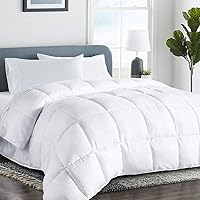
The COHOME king comforter is 102 in by 90 in and weighs 7.9 lb. It uses polyester fill and a soft polyester fabric cover with box stitching to limit shifting.
COHOME describes it as lightweight and breathable for year-round use. It ships compressed and regains volume within 24 to 48 hours after unpacking.
Corner tabs help secure it inside a duvet cover. COHOME says it can also be used on its own without a cover.
Wash it on a gentle cycle and tumble dry on low heat at 40C or below. That care helps the fibers expand and restore loft after washing.
Its solid white pattern keeps the look simple. A single pack with one comforter keeps the purchase focused on the insert itself.
The fabric type is listed as soft polyester fabric. That shell choice helps explain the brushed, quiet feel described in the bullets.
Exquisite hemming is meant to reduce loose threads and leakage. Box stitching supports that goal by dividing the fill into sections.
A gentle first wash after unpacking is recommended for best fluffiness. That step lets the high loft fibers expand after vacuum compression.
Do not bleach this comforter. Skipping bleach protects the polyester fibers and the shell finish.
What is the difference between a comforter, duvet insert and blanket?
A comforter is finished for direct use, a duvet insert is made to go inside a duvet cover, and a blanket is a thinner layer for warmth or drape. Many products blur the lines, so check how each one is meant to be used.
A stand-alone comforter often has a finished shell and quilting you can place over sheets. A duvet insert is usually plainer and relies on a removable cover for looks and protection.
Our comparison of comforter vs duvet insert explains the practical differences in size, care and cost. It also explains when a duvet cover adds enough value to justify the extra laundry.
A blanket sits between a sheet and a comforter or on top for extra warmth. Throws are smaller and often used on a couch, while bed blankets are sized to cover the bed.
The comforter vs blanket guide breaks down weight, use and layering. If you sleep hot, you may need only a blanket in summer and a comforter in winter.
A duvet cover set protects the insert and gives you a changeable look. Learn what to check in what is a duvet cover set before you buy one, including size, closure and fabric.
Ties at the corners make a duvet insert easier to secure. Simple and firm ties help the cover stay attached during sleep and washing.
A comforter used without a cover saves laundry steps. That option works well when the shell is finished, washable and attractive on its own.
Blanket form also signals use. A throw blanket is sized for a couch or chair, while a comforter form is sized for full bed coverage.
The REST Evercool comforter is 90 in by 90 in and weighs 5.5 lb. Its fabric is 90% cooling nylon and 10% spandex, and the fill is Tencel lyocell and Sorona Aura fiber.
REST says the fabric gives a cool-to-touch feel and is lab rated 2x cooler than silk. REST also says it helps reduce night sweats and is free from harsh chemical additives.
The fill is described as cloud-like and breathable for year-round use. REST positions it for hot sleepers, air-conditioned rooms and gifting.
Care is specific: wash cold on low with a low alkaline or neutral detergent, do not bleach, do not use fabric softener, and tumble dry on low or no heat. Do not iron or dry clean it.
Its Snow Ivory color is a solid pattern. That neutral tone pairs easily with different sheet colors.
The comforter arrives as one item in one pack. That matters when you plan to add matching Evercool bedding pieces over time.
Antistatic, skin friendly, tear resistant and wrinkle resistant features are listed. Those details support daily use in guest rooms and family beds.
Which comforter warmth is right for each season?
Warmth depends on fill weight, shell and your room temperature, not on the word all-season alone. All-season usually means a middle weight that works in spring and fall and layers in winter.
Lightweight comforters suit summer, warm rooms and hot sleepers. They often use less fill, a breathable shell and a smooth surface that does not trap heat.
The guide to all season vs lightweight comforter helps you match weight to your climate. If your bedroom stays cool, an all-season comforter may serve you most of the year.
Winter comforters need more fill or a denser shell. Pair a heavier comforter with a blanket instead of buying a very thick comforter you can only use for a few weeks.
See best comforter for winter for cold-weather options.
The best all season comforter picks focus on balanced weight and breathable shells. That balance helps in spring and fall and works under a blanket in winter.
Your mattress and topper also affect warmth. A mattress that holds heat can make a mid-weight comforter feel too warm, so consider your full sleep setup.
If you are still choosing the mattress beneath the comforter, how to pick mattress firmness without guessing will help you match support to your sleep position before you add bedding.
Blankets add warmth in layers. A cotton blanket works for mild nights, a wool blanket for cold nights, and a fleece or sherpa blanket for very cold rooms.
Compare fleece and sherpa in fleece blanket vs sherpa blanket. Sherpa is usually thicker and warmer, while fleece is lighter and dries fast.
For a breathable natural layer, see best cotton blanket for bed and best wool blankets for beds. Wool regulates temperature, while cotton is easier to wash for many households.
Season labels also help narrow the field. A product listed for all seasons is designed for year round use, while a winter listed blanket is aimed at cold conditions.
Lightweight warmth descriptions signal a thinner feel. That label suits warm sleepers and layering, not a cold bedroom on its own.
Layering gives more control than one thick piece. A light comforter plus a wool throw lets you adjust on a night by night basis.
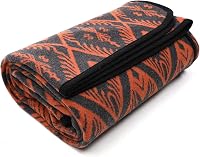
The PuTian blanket measures 87 in by 63 in and weighs 4 lb. Its fabric blend is 30% merino wool, 40% polyester, 16% acrylic, 7% cotton and 7% nylon.
PuTian says the mix of Australian merino wool and synthetic fiber improves softness and reliability. Tight knitting and proper weight help it hold heat for bed, couch and outdoor use.
The pattern is geometric, striped and Bohemian in Bohemia Orange. The sides are bound to reduce fraying at the edge.
PuTian lists uses that include bed throws, sofa throws, camping, picnic, car and emergency use. Wash it in cold water and tumble dry low.
Its modern style and Bohemia Orange color add visual interest. That design choice suits a living room as well as a campsite.
The generous size covers two people on a couch or a bed corner. At 4 lb, it adds warmth without the weight of a full comforter.
High strength yarn supports bursting strength and durability. Bound sides help the blanket keep its shape through repeated use.
The Arcturus blanket is twin size at 64 in by 88 in and weighs 4.5 lb. It is made with 80% wool and 20% synthetic fibers in a dense loom-woven blend.
Arcturus says wool regulates temperature and keeps insulating when damp. The synthetic fibers strengthen the weave, reduce shedding and make it machine washable.
The blanket is washed three times before shipping. Arcturus says it arrives softer and ready to use.
For care, machine wash cold on delicate and tumble dry low or hang to dry. Uses include camp bedding, stadium and tailgate blankets, couch and cabin blankets and vehicle emergency use.
Its dense weave helps it handle outdoor use. Hemmed edges and contrast lock stitching give it a finished, durable look.
At twin size, it works as a layer on a larger bed. It also covers one person fully on a couch or in a tent.
Wool that keeps insulating when damp is a key camping advantage. Dew and light rain are less likely to ruin the night.
How do you choose a comforter for hot sleepers and couples?
Hot sleepers need a breathable shell, light fill and a smooth surface that does not trap heat against the skin. Couples also need enough width so one person does not pull the comforter away from the other.
The REST Evercool comforter above is built for that brief. Its cooling nylon fabric and light Sorona and Tencel fill aim for cool-to-touch comfort without a heavy feel.
Its knitted fibers are described by REST as 5x thinner and stronger than silk. The fabric is also described as resistant to snags, pilling and pet hair.
REST says no flat sheet is needed for easy care, and the comforter is machine washable and dryer safe. Follow the detailed wash instructions above rather than guessing on detergent or heat.
Couples who sleep at different temperatures can layer a blanket on one side. That solves the problem better than buying an oversized comforter that is too warm for both people.
A cooling comforter can reduce reliance on air conditioning for some households, according to REST. It will not cool a warm room on its own, so keep bedroom ventilation in mind.
Weighted blankets are a separate choice. They add pressure and warmth, so they suit people who like that feel and sleep cool.
See best weighted blanket for adults before you add one to a bed.
Electric blankets add heat on demand. Compare controls and uses in electric throw vs electric blanket, and follow safety instructions for the model you choose.
Menopause hot flashes and night sweats are specific use cases REST mentions. A light, breathable comforter can help by reducing trapped heat at the skin.
Gift packaging is another detail. REST comforters come in a sturdy kraft box, which suits gifting to hot sleepers.
Pet hair resistance helps in homes with animals. A fabric that resists snags and pilling also holds up better with frequent washing.
Air conditioned rooms are a listed recommended use. In that setting, a cooling comforter adds comfort without adding winter weight.
How do you pick a comforter that is easy to wash and keep fluffy?
Easy care means a fill and shell you can wash at home without clumping, flattening or losing loft. Box stitching, baffle construction and a washable shell make a real difference over time.
Box-stitched comforters divide the fill into pockets. The pockets limit shifting and keep warmth more even after repeated washes.
The COHOME king comforter uses box stitching and hemming to limit filling leakage. Its corner tabs also help it stay placed inside a duvet cover.
Wash comforters on a gentle cycle with enough room to move. A large washer helps, because a crowded drum can compress the fill and reduce cleaning.
Use a mild detergent and avoid excess softener, which can coat fibers and reduce loft. Tumble dry on low heat until fully dry, then fluff and fold to restore volume.
Down comforters need extra attention. Our guide on how to wash down comforter covers gentle washing, low drying and fluffing to restore loft.
Wool blankets need cold water and low heat. The PuTian blanket can be machine washed in cold water and tumble dried low, according to PuTian.
The Arcturus blanket needs cold wash on delicate and low tumble dry or hang dry. That routine protects the wool blend and its hemmed edges.
A duvet cover makes washing easier because you wash the cover often and the insert less often. Choose a cover with a secure closure and corner ties that match your insert.
If you want sheets and a comforter in one change, see best bed sheets with comforter. A set can simplify laundry, but check sizes so the comforter still has the overhang you want.
Quilt sets are another option for a lighter look. Look at best quilt sets on sale if you want a flatter, decorative layer over sheets.
Care instructions differ by material, so read the label for each product. Polyester comforters often tolerate gentle washing, while cooling nylon comforters need cold water and no softener.
The PuTian blend is designed so fibers do not cover the washing machine. That detail helps wool blends feel more practical at home.
Triple washing before shipping is a benefit of the Arcturus blanket. It arrives softer, which can reduce the need for a first wash before use.
Loft restoration after washing is a sign of good care. Tumble drying on low heat helps polyester fibers expand and regain volume.
Explore comforters & blankets by topic
- Queen vs Oversized Queen Comforter: Which Size Fits?
What makes a comforter worth buying for your home?
A comforter is worth buying when its size, fill, warmth and care match your bed and your routine. The best choice is the one you will use often and wash without dread.
Start with size. A king comforter at 102 by 90 in will drape differently from a full/queen comforter at 90 by 90 in, even if both feel soft.
Then match warmth to your room. Hot sleepers should start with cooling options, while cold rooms need wool or a heavier winter comforter.
Then check care. Polyester and down alternative fills often wash more easily than down, while wool needs cold water and low heat.
Finally, check the shell. A brushed polyester cover feels soft and quiet, while cooling nylon feels smooth and cool to the touch.
Wool blends feel natural and regulate temperature.
The COHOME comforter suits buyers who want a large, washable king comforter for all seasons. Its box stitching, corner tabs and gentle wash care support daily use.
The REST comforter suits hot sleepers who want a light, cool-to-touch full/queen comforter. Its specific care rules are less forgiving, so follow them from the first wash.
The PuTian throw suits a couch, camp or guest bed where a smaller wool blend blanket adds color and warmth. Its Bohemia Orange pattern is a style choice as much as a warmth choice.
The Arcturus blanket suits camping, tailgates and cold rooms where a durable wool blend matters more than a decorative look. Its twin size and 4.5 lb weight make it easy to carry and layer.
How to make your final choice
Compare the four products by bed size first. King, full/queen and throw sizes serve different beds and rooms.
Next, compare fill and shell together. Polyester, cooling nylon and wool blends feel and wash differently.
Then consider where the blanket will live. A bedroom comforter, a couch throw and a camping blanket have different durability needs.
Finally, confirm care before you buy. A comforter you can wash on a gentle cycle will usually get more use than one you avoid cleaning.
Use this guide as your hub. Pick your size, compare fills, match warmth to your room, and choose a care routine you will follow.
That order will help you buy a comforter or blanket that fits your bed and your life.
Frequently asked questions
What size comforter should I buy for a queen bed?
A standard queen comforter often leaves little overhang, so many households size up or choose an oversized queen for a fuller drape. Our guide to best comforters queen size and the queen vs oversized queen comforter comparison help you decide based on mattress height and shared use.
How do I choose a duvet insert?
To choose a duvet insert, match its size to your duvet cover, then pick fill weight for your room temperature. A down comforter buying guide section below explains down, down alternative and wool options.
The comforter vs duvet insert guide clarifies when you need a cover and when a stand-alone comforter works.
What size is a California king comforter?
A California king comforter is generally longer and narrower than a standard king comforter to suit the taller mattress. Check the exact length and width before you order, because brands vary.
Start with what size is a king comforter and then measure your mattress and any duvet cover.
Can I wash a down comforter at home?
Many down comforters can be machine washed on a gentle cycle and tumble dried low, but care depends on the shell and fill. Follow the care label first.
Our step by step guide on how to wash down comforter covers loading, detergent, drying and fluffing after the wash.