Twin vs Queen Mattress: Which Size Should You Choose? (November 2026)
Choose a twin for a single sleeper in a small room and a queen for a couple or a larger bedroom. A twin mattress vs queen choice comes down to width, room fit and how much shared space you need at night.
On this page (12 sections)
- Twin vs queen mattress: which size should you choose?
- Twin and queen side by side
- Sleeping space for single sleepers
- Sleeping space for couples
- Room fit and layout
- Twin mattress vs queen for kids and guests
- Firmness, support and sleep position
- Sheets, bedding and pillows
- Which brands and materials matter?
- Who should buy a twin?
- Who should buy a queen?
- Final verdict: twin mattress vs queen
Choose a twin for a single sleeper in a small room and a queen for a couple or a larger bedroom. A twin mattress vs queen choice comes down to width, room fit and how much shared space you need at night.
A twin is 39 inches wide and 75 inches long. A queen is 60 inches wide and 80 inches long.
That 21-inch width gap is the main reason couples usually pick a queen.
Our score weighs specs, features and buyer feedback against what you're shopping for. We have also included bedding and safety items that solve common problems after you choose a size.
Twin vs queen mattress: which size should you choose?
Pick a twin if one person will sleep in it and space is tight, and pick a queen if two people will share it. Start with who sleeps in the bed, not with the room alone.
A single adult can sleep well on a twin, but some adults want more room to stretch. If you change positions a lot, a queen may feel better even in a modest room.
A couple can share a twin for a short stay, but it is a close fit for regular use. A queen gives each person about 30 inches of width, which is a clear step up from 39 inches shared by two.
Use a mattress size chart to check exact inches before you buy a frame or bedding. It helps you compare twin, full and queen side by side in one place.
The weight difference also affects the choice. The Linenspa twin hybrid weighs 39.5 pounds, while a queen hybrid with the same type of construction would be heavier and harder to move.
An air twin at 10.7 pounds is far easier to carry from room to room.
Twin and queen side by side
A twin saves floor space, while a queen adds width for sharing. The table below shows the key differences that affect daily use.
| Feature | Twin | Queen |
|---|---|---|
| Size | 75 x 39 inches | 60 x 80 inches |
| Best for | Single sleeper, child, guest | Couple, larger bedroom |
| Width per sleeper | 39 inches alone | About 30 inches each for two |
| Frame and sheet size | Twin size | Queen size |
| Portability | Easier to move and rotate | Heavier and harder to carry |
A twin fits more easily through doors and up stairs. A queen needs a wider path and a stronger frame for two sleepers.
Sheets are not interchangeable between the two sizes. A queen fitted sheet will be loose on a twin, and a twin sheet will not fit a queen.
Frames also differ in handling. A twin frame can often be moved by one person, while a queen frame usually needs two people and a clear path through doorways.
Sleeping space for single sleepers
A twin gives a single sleeper 39 inches of width and 75 inches of length. That is enough for many adults, teens and children who sleep alone.
Side sleepers may bend their knees and use less width. Back and stomach sleepers often want more room to move, so check your own habits before you rule out a twin.
Tall sleepers should note the 75-inch length. If you are close to 6 feet tall, you may want a longer mattress or a queen at 80 inches long.
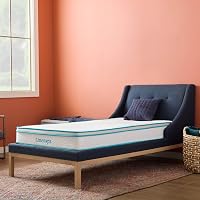
The Linenspa hybrid below is 74 x 39 x 8 inches with a medium-firm feel. Linenspa says it suits back and stomach sleepers, teens and guest rooms.
Setup time and expansion for a twin hybrid
The Linenspa arrives compressed in a box, so setup is not instant. Linenspa says to open the mattress promptly and allow 24 to 72 hours for full expansion, with faster expansion in a warm room.
That window affects furniture decisions. If you need the bed for guests the same day, plan around the expansion period rather than counting on full thickness right away.
The hybrid construction also explains the feel. It uses Bonnell coils, comfort foam and memory foam, with a polyester cover listed in the product data.
Linenspa lists breathable construction, low motion transfer and pressure relief among its additional features.
Sleeping space for couples
A queen gives two sleepers about 30 inches of width each, compared with about 19 inches each on a twin. That difference changes how much partners can move without touching.
Couples who sleep close together may still like a twin for a guest room. For a main bedroom, a queen is the safer choice for comfort and shared blankets.
Motion matters more on a shared bed. A queen does not remove motion, but it spreads two sleepers farther apart than a twin does.
Our full mattress vs queen guide is useful if you are torn between a full and a queen. A full sits between twin and queen for width, but a queen still suits couples best.
A queen also changes how you use pillows and blankets. Two sleepers can each use a standard pillow with room left over, while shared covers are less likely to be pulled during the night.
Room fit and layout
Measure the room, then leave space to walk on both sides of the bed. A queen can fit in a room and still feel cramped if doors, dressers or walkways are blocked.
Start with the mattress footprint. A twin covers about 20 square feet, while a queen covers about 33 square feet before you add a frame.
Mark the footprint with tape on the floor. Stand at each side and check that you can get in and out without climbing over furniture.
A twin leaves more room for a desk, dresser or nightstands in a small bedroom. A queen needs a wider room or a simpler layout to work well.
Measure door swing as well as wall length. A queen that fits against a wall may still block a door that opens inward, while a twin placed in the same spot may leave a clear path.
Tape the frame footprint, not just the mattress, because frames add inches on each side.
Twin mattress vs queen for kids and guests
A twin suits kids, teens and most guests, while a queen suits a guest room that also hosts couples. Think about who will use the room most often.
Children often outgrow a twin for length before they outgrow it for width. A twin at 75 inches long works for many kids, but check growth if your child is tall.
Guest rooms are a common twin choice because they save space. If guests often travel as couples, a queen gives a better first impression.
For a toddler moving from a crib to a big bed, a rail can help on a twin. The rail below fits twin, full and queen beds and measures 43 inches long and 20 inches tall.
The Regalo rail is listed for children ages 2 to 5, with a mesh and metal construction and a white finish. It uses an anchoring system and a swing-down design, so it can pivot out of the way for entry and sheet changes.
Care is simple in the product data. The cover can be wiped with a damp cloth, and the frame is an all-metal design that installs with no tools required.
It is designed for use with a mattress and box spring, so a flat air mattress alone would not match that setup.
Firmness, support and sleep position
Size does not decide firmness, so check the feel of the exact mattress you buy. A twin and a queen can have the same materials and feel very different in use.
The Linenspa twin hybrid pairs memory foam with innerspring coils. Linenspa says the mix gives contouring support and a medium-firm feel for any sleep position.
Medium-firm is a common starting point for back and stomach sleepers. People with back pain often prefer medium-firm, and you should talk to a doctor about ongoing pain.
An air mattress is a different option for occasional use. The Intex model below is 13 inches high and inflates with a built-in electric pump in about 2 minutes.
That Intex air mattress has a velvety top and Fiber-Tech Construction. Intex says the beams help the bed keep its shape without sagging under the sleeper.
Intex also lists horizontally positioned beams with 50 percent greater individual strand count. The material is vinyl, the cover material is velvety fabric, and the capacity is listed at 136.07 kg.
The pump needs a power source. Intex lists a built-in AC electric pump at 110 to 120 volts, so the bed is best where an outlet is nearby.
It also includes a carry bag, which helps for travel and storage.
Intex warns that material stretch at first inflation can feel like a loss of pressure. The bed will settle within 2 to 3 nights, and a simple re-inflation handles that early change.
Sheets, bedding and pillows
Buy sheets in the same size as the mattress, and check pocket depth for thick beds. A queen sheet set will not make a twin safer or more comfortable, and it will bunch on the sides.
The RUVANTI set below is a queen set with a fitted sheet for 60 x 80 inches and a 16-inch deep pocket. It fits mattresses from 10 to 16 inches thick.
RUVANTI says the percale weave is crisp, light and breathable for hot sleepers. It may wrinkle slightly after washing, which is common for cotton percale.
The set has four pieces in total. It includes a flat sheet at 90 by 102 inches, a fitted sheet at 60 by 80 inches with a 16-inch deep pocket, and two pillowcases at 20 by 30 inches.
The fabric is 100 percent cotton percale, and the listed weight is 2.2 pounds. RUVANTI describes the feel as crisp and hotel style, and it says the sheets soften slightly with each wash while keeping a breathable texture.
Pillows also affect comfort on any size. Our sleep pillows guide helps you match pillow height to your sleep position, and our down pillow vs feather pillow guide covers fill and feel.
Which brands and materials matter?
Choose materials by how you sleep, not by size alone. Memory foam, coils, air and cotton bedding each solve a different problem.
A hybrid twin gives foam pressure relief plus coil support. An air twin gives portability and height for guests, but it needs power and may need a top-up after the first nights.
For comparing mattress types in more depth, see our pillow top mattress vs memory foam guide. It explains feel and support in a way that helps you judge a twin or queen by construction.
Brand fit matters for warranty and setup. Linenspa backs its hybrid with a 10-year limited warranty, and Intex backs its air mattress with a 1-year limited warranty.
Model numbers help you compare like with like. The Linenspa part number is LS08TTMFSP for the 8-inch twin hybrid, while the Intex part number is 67765ED for the 13-inch air model.
Who should buy a twin?
Buy a twin for a single sleeper, a child, a teen, a bunk bed or a small guest room. It is the clear choice when floor space is limited.
A twin also suits a studio or dorm where you need room for other furniture. It is easier to move, rotate and store than a queen.
Adults who sleep alone and like a snug bed may prefer a twin. If you want more stretching room, compare the best twin mattress for adults before you decide.
Check length if you are tall. A 75-inch twin will be close for sleepers near 6 feet tall, while an 80-inch queen gives more toe room.
A twin also fits bunk beds and trundles in the Linenspa product description. Its 8-inch profile is listed as ideal for youth rooms, a guest bed, bunk beds and trundle beds.
Who should buy a queen?
Buy a queen for a couple, a main bedroom or a guest room that hosts two people. The extra width is the main benefit, and it is a large one.
A queen also suits a single sleeper who wants room to move. You get more space for pillows, blankets and changing positions through the night.
Make sure the room can hold the frame plus walk space. A 60 x 80 inch mattress needs more than the mattress footprint alone, since frames extend beyond the edges.
Use our mattress size chart and measure your doorway. A queen can be hard to carry up stairs, so plan the route before delivery day.
A queen also works better when a room must do double duty. It can serve as a main bed and still host guests, while a twin guest setup may need an extra air bed for a second guest.
Final verdict: twin mattress vs queen
Pick a twin if one person sleeps in it and you want space for other furniture, and pick a queen if two people share it or you want more room to move. That rule covers most buyers.
For a lasting twin, the Linenspa 8-inch hybrid is a strong everyday option. For a guest or travel bed, the Intex 13-inch air mattress is portable and quick to inflate.
Check what is twin mattress size if you need exact twin inches before you buy sheets or a frame. Then compare that with your room tape layout to make the final call.
If you want brand-specific help, our nectar vs casper mattress guide shows how to compare two brands by feel and construction.
Frequently asked questions
Is a twin or queen mattress better for a couple?
A queen is better for most couples because it is 60 inches wide, compared with 39 inches for a twin. That extra width gives each sleeper more personal space and makes shared sheets and blankets easier to manage at night.
What size room fits a queen mattress?
A queen mattress is 60 x 80 inches, so you need clear floor space for the bed plus room to walk and open doors. Measure the room and leave space on both sides for nightstands and safe access before you order a queen frame.
Can a twin mattress fit in a small bedroom?
Yes, a twin at 75 x 39 inches fits most small bedrooms and leaves room for a nightstand, dresser or desk. It suits a single sleeper, a child or a guest room, and it is also a practical choice for bunk beds and trundles.