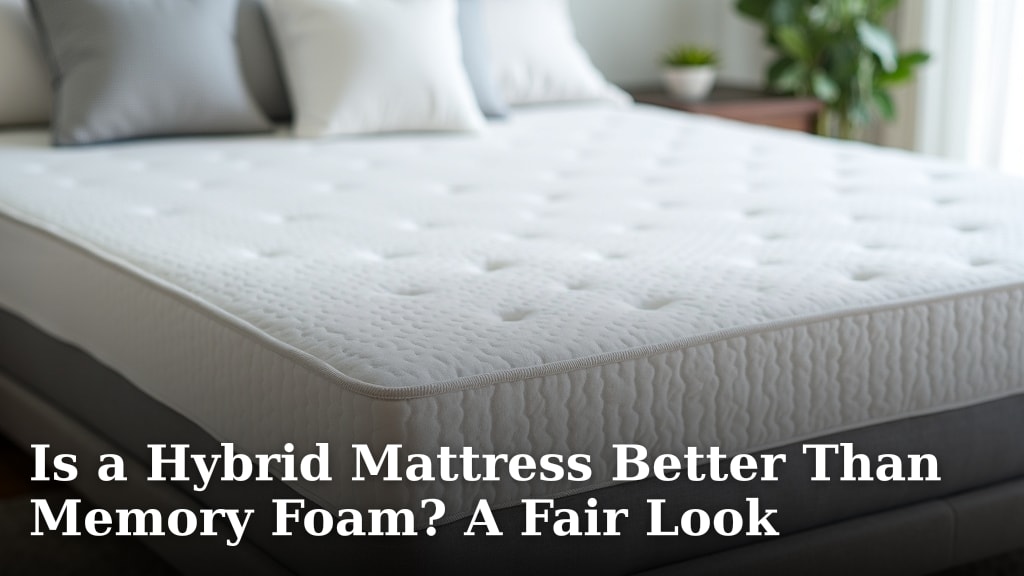
Is a Hybrid Mattress Better Than Memory Foam? A Fair Look
Deciding between a hybrid mattress and a memory foam mattress can feel like a puzzle. For most people, a hybrid mattress offers a better balance of support and comfort. This is because it combines the responsiveness of coils with the contouring hug of foam layers.
You might be wondering which one will give you that perfect night’s sleep. Both have their fans for good reason. But when we looked at how they perform for different sleeping positions and firmness preferences, the hybrid often came out on top for overall satisfaction. It’s about getting the best of both worlds for your sleep.
TL;DR:
- Hybrid mattresses generally offer a better overall sleep experience for most people.
- They combine coil support with foam comfort for a balanced feel.
- Memory foam excels at pressure relief and motion isolation.
- Hybrids are often better for hot sleepers and those who want more bounce.
- Your personal preference is key, but hybrids tend to be more versatile.
Let’s dive in and see what makes each mattress type special, so you can pick the one that’s truly right for your sleep.
Hybrid vs. Memory Foam: Which Mattress is Right for You?
When you’re hunting for that perfect mattress, two popular choices often pop up: the hybrid and the memory foam. Both promise a great night’s sleep, but they do it in different ways. We’ve looked at what makes each one tick to help you decide which one might be your sleep soulmate.
Think of it like choosing between a comfy, supportive armchair and a plush, sinking couch. You might love both, but you’ll probably use them for different things. That’s a bit like the difference between a hybrid and a memory foam mattress.
Understanding Memory Foam Mattresses
Memory foam is known for its ability to contour to your body. It’s like a gentle hug that cradles your pressure points. When you lie down, the foam slowly softens and molds to your shape. This can feel incredibly comforting for many sleepers. Our guide to what is a plush mattress explains how these can offer superior pressure relief.
This unique property means memory foam can be fantastic for relieving pressure. Areas like your hips and shoulders often experience less stress. Many studies highlight memory foam’s effectiveness in reducing pressure, which is great for people with joint pain (NCBI).
The Feel of Memory Foam
The sensation of sinking into a memory foam mattress is distinct. It’s a feeling of being enveloped. This can be wonderfully cozy. Some people describe it as feeling like they’re floating on a cloud. Others might find it a bit too “stuck.”
Motion Isolation: A Memory Foam Strength
One of the biggest wins for memory foam is its motion isolation. If your partner tosses and turns, you’re less likely to feel it. This is because the foam absorbs movement rather than transferring it. For couples, this can mean fewer sleep interruptions. It’s like having your own personal sleep bubble.
Temperature Regulation: Where Memory Foam Can Struggle
Historically, memory foam has had a reputation for sleeping hot. Because it contours so closely, it can trap body heat. Newer advancements have introduced cooling gels and open-cell structures to help with this. However, it’s still something to consider, especially if you tend to overheat at night.
What Exactly is a Hybrid Mattress?
A hybrid mattress is essentially a combination. It blends the supportive core of an innerspring mattress with the comfort layers of foam (like memory foam or latex). This fusion aims to give you the best of both worlds.
You get the bounce and support from the coils. You also get the pressure relief and contouring from the foam layers on top. This duality makes it a very versatile choice for a wide range of sleepers.
The Support System of a Hybrid
The foundation of a hybrid mattress is typically a system of pocketed coils. These coils work independently, offering targeted support. They allow for better airflow through the mattress. This coil system provides a sturdy base that prevents excessive sinking. It also contributes to edge support.
Comfort Layers in Hybrids
On top of the coils, you’ll find comfort layers. These can be memory foam, latex, or other types of foam. The thickness and type of these layers greatly influence the mattress’s feel. They provide that cushioning effect you expect from a quality mattress.
Breathability in Hybrid Designs
Thanks to the coil system, hybrids generally offer better airflow than all-foam mattresses. The space between the coils allows air to circulate freely. This makes them a cooler option for many people. If you sleep hot, this is a big plus.
Comparing Key Features: Hybrid vs. Memory Foam
Let’s break down how these two mattress types stack up against each other on the most important factors for your sleep.
| Feature | Memory Foam | Hybrid |
|---|---|---|
| Pressure Relief | Excellent, deep contouring hug. | Very Good, balanced contouring. |
| Support | Good, can feel a bit too soft for some. | Excellent, strong coil base. |
| Motion Isolation | Excellent, minimal disturbance. | Good, coils can transfer some motion. |
| Temperature | Can sleep warm; newer models are cooler. | Generally cooler due to airflow. |
| Bounce/Responsiveness | Low bounce, slow response. | Good bounce, responsive feel. |
| Edge Support | Can be weaker, prone to sagging. | Typically stronger and more stable. |
| Durability | Varies greatly by foam density. | Often very durable due to coil support. |
Who Benefits Most from Memory Foam?
Memory foam mattresses are often a great choice for individuals who experience joint pain. The deep contouring helps distribute body weight evenly. Side sleepers often find relief for their hips and shoulders. People who share a bed and are sensitive to movement also love memory foam for its superior motion isolation.
Who is a Hybrid Mattress Best For?
Hybrid mattresses tend to be a universal favorite. They suit a wide range of sleeping positions. Back sleepers appreciate the balanced support. Stomach sleepers get a firmer feel that prevents their hips from sinking too low. Plus, those who like a mattress with some bounce will enjoy a hybrid. If you tend to sleep hot, the breathability is a major advantage.
Making Your Final Decision
Ultimately, the “better” mattress is the one that fits your unique sleep needs. Consider these points as you decide:
- Your Sleep Position: Are you a side, back, or stomach sleeper?
- Your Body Weight: Lighter individuals may prefer softer, contouring foams. Heavier individuals need more robust support.
- Your Temperature Preferences: Do you often wake up feeling too hot or too cold?
- Partner Disturbance: Is motion transfer a concern for you and your partner?
- Your Firmness Preference: Do you like to sink in or sleep on top of the mattress?
We found that many people looking for a balanced sleep experience lean towards hybrids. They offer a mix of support and comfort without the extreme sinking feeling some associate with memory foam. However, if unparalleled pressure relief and motion isolation are your top priorities, a high-quality memory foam mattress could still be your perfect match.
Conclusion
You’ve seen that both hybrid and memory foam mattresses offer unique benefits. Memory foam shines with its deep contouring for pressure relief and excellent motion isolation, perfect for couples or those with joint pain. Hybrids, on the other hand, provide a robust support system with coils and enhanced breathability, often making them a more versatile choice. We found that for most sleepers seeking a balanced feel with good support and cooling, a hybrid mattress often edges out memory foam. Before you buy, think about your sleep position, body weight, and temperature preferences to make the best choice for your dream sleep.
Frequently Asked Questions
Will a hybrid mattress feel too firm for me?
Not necessarily. While hybrids offer strong support from coils, the comfort layers on top can be made of various foams, including memory foam or latex. You can often find hybrids with plush top layers that provide a softer initial feel while still benefiting from the underlying support. Your choice of comfort layer thickness and material will greatly influence the overall firmness you experience.
Is memory foam really too hot for everyone?
While older memory foam models had a reputation for trapping heat, newer technologies have significantly improved this. Many modern memory foam mattresses incorporate cooling gels, open-cell structures, and breathable covers designed to dissipate heat. If you’re a hot sleeper but love the feel of memory foam, look for these advanced cooling features.
Which mattress is better for stomach sleepers, hybrid or memory foam?
Generally, hybrid mattresses are a better choice for stomach sleepers. The coil support system in a hybrid offers a firmer surface that helps keep your hips elevated, preventing your spine from sinking into an unnatural position. While some firmer memory foam mattresses can work, many stomach sleepers find they sink too much on all-foam options, leading to back strain.
Can a hybrid mattress still offer good motion isolation?
Hybrids offer good, but typically not the absolute best, motion isolation compared to memory foam. The pocketed coils in most hybrids work independently to minimize motion transfer. However, because there are coils, some movement might still travel through the mattress. If motion isolation is your absolute top priority, memory foam usually performs better.
How does edge support differ between hybrid and memory foam?
Hybrid mattresses generally provide superior edge support. The coil system, often reinforced around the perimeter, creates a stable edge that is less likely to sag when you sit or sleep near the side. Many all-foam mattresses, including memory foam, can have weaker edge support, making them feel less stable on the edges.