Bunkie Board vs Bed Slats: Which Should You Choose? (November 2026)
Choose a bunkie board for a flatter support surface, or bed slats for more airflow and a simple built-in base. Your mattress type, slat spacing and desired bed height decide which option fits.
On this page (10 sections)
- Bunkie board vs bed slats: which gives better mattress support?
- Which option gives better airflow?
- Which foundation keeps the bed lower?
- Which choice works with your bed size?
- Which products fit each setup?
- What is easier to set up?
- Bunkie board vs plywood: which should you choose?
- Bed frame vs platform bed: what is the difference?
- Can a bunkie board work with a hybrid mattress?
- How should you choose between a bunkie board and bed slats?
Choose a bunkie board for a flatter mattress surface, or bed slats for more open airflow and a built-in foundation. In this bunkie board vs bed slats comparison, the right choice depends on slat spacing, mattress requirements, bed height and whether you need a complete frame.
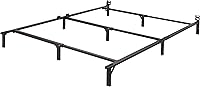
A bunkie board sits between the mattress and the supporting frame. It helps bridge gaps between slats, while bed slats support the mattress through multiple spaced rails.
The key difference is coverage. A board gives more continuous support across the mattress base, while slats leave open areas that reduce material and allow air to move underneath.
Think about what is already under your mattress before you decide. If you have a frame in good condition with slats that are too far apart, a board may solve the support issue without replacing the whole base.
If your frame is missing, worn or too low for your needs, a platform bed with built-in slats will give you a complete foundation from the start.
Mattress type also matters in daily use. Memory foam, latex and hybrid models often feel a different firmness when the base underneath is continuous rather than spaced.
A flatter surface can spread pressure more evenly across the mattress, while widely spaced slats can let softer sections dip between the rails.
Bed height is another practical factor worth checking early. A thin board adds very little to the overall height, so your mattress will sit at nearly the same level as before.
A new platform frame, by contrast, will set the mattress at the frame height, which can change how easily you get in and out of bed and how much space remains underneath for storage.
Airflow should be weighed alongside support, not treated as the only deciding point. Open slats leave more space for air circulation under the mattress, which some people prefer in warmer rooms.
A board covers more of that space, even when the material is breathable, so it suits people who value even support more highly than maximum openness.
Care needs differ as well. Slats and frame joints should be checked for tightness over time, and dust can be removed from open spaces more easily.
A board should be kept clean and dry, placed flat on a stable frame and checked to make sure it has not shifted under the mattress.
Measure your mattress and inspect the frame before ordering either option. Confirm the size, the slat spacing your mattress maker requires and the height you want in the room.
That simple check will point you toward the board or the slats that will work best for your setup.
 Best for a complete slatted base
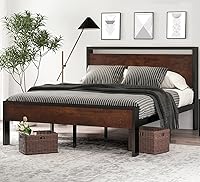
HLIPHA Metal Platform Bed Frame 14 Inch
 Best for low-profile queen support
Meliusly Original Bunkie Board Queen Size
Bunkie board vs bed slats: which gives better mattress support?
A bunkie board gives the more continuous surface, while bed slats give direct support at spaced points. Choose the board when gaps are wide or your mattress instructions call for closer support than the frame provides.
The Meliusly Original Bunkie Board Queen Size measures 60 x 80 x 0.4 inches. The full-size version measures 54 x 75 x 0.4 inches.
Both are designed to sit over slats or bars, not replace the supporting structure.
A slatted foundation can work well when the rails are close enough and properly supported. The mattress rests across the rails, but parts of its underside sit above the open spaces.
A bunkie board spreads the mattress contact across a wider surface. That can help reduce the chance of the mattress sinking into gaps between rails.
When should you add a bunkie board?
Add a bunkie board when your existing slats are too far apart for the mattress, when the mattress feels uneven over the gaps or when you want a flatter base without replacing the whole frame.
Meliusly says its queen and full boards support slats or bars spaced up to 8 inches apart. That does not override your mattress warranty requirements, so check the spacing rule for your exact mattress.
The board also suits a low-profile setup. Its 0.4 in thickness adds little height compared with a new platform frame.
For a deeper explanation of the part itself, see what is a bunkie board for a bed.
When are bed slats enough?
Bed slats may be enough when they are properly spaced, firmly attached and supported by the frame. They can provide a simple base without adding another layer between the mattress and frame.
A complete platform bed can make this choice easier because the slats and frame are designed as one system. The HLIPHA metal frame has a 14 in height, a full-size platform base and a 1100 lb maximum weight recommendation.
Which option gives better airflow?
Bed slats usually allow more open airflow because spaces remain between the rails. A bunkie board covers those spaces, although the Meliusly boards use a breathable, moisture-resistant construction.
Airflow depends on more than the foundation. The room, mattress materials, bedding and clearance beneath the bed also affect how freely air can move.
A slatted base leaves open sections below the mattress. That can make the underside easier to air out, but the mattress still needs the support spacing required by its manufacturer.
A bunkie board provides a broad support surface. It can be useful when support coverage matters more than having the most open space beneath the mattress.
Don't choose a foundation only by its airflow claim. The board may be the better fit if wide slat gaps could affect mattress support.
Which foundation keeps the bed lower?
A 0.4 in bunkie board keeps the bed lower than a complete platform frame. It adds a thin support layer, while a platform bed raises the mattress according to the frame's height.
The Meliusly queen and full boards are both 0.4 in thick. They are useful when your mattress already sits at a comfortable height or when you want to preserve the appearance of an existing frame.
The HLIPHA frame stands 14 in from the ground. Its height creates under-bed storage, but it will place the mattress higher than a low-profile board used on an existing frame.
The Mellow Naturalista Classic stands 12 in high and uses a solid wood frame with wooden slats. It offers a complete queen platform, but it is not a low-profile support layer.
See best low profile mattress foundation if height is your main concern.
Which choice works with your bed size?
Match the support to the exact mattress size before comparing materials. A full board will not provide the same edge-to-edge coverage as a queen board, even if the frame looks similar.
The Meliusly full board measures 54 x 75 in, matching a standard full mattress footprint. The queen board measures 60 x 80 in.
The HLIPHA metal platform frame is made for a full mattress. The Mellow Naturalista Classic is made for a queen mattress.
Measure the mattress and the inside of the frame. Check whether the frame has lips, center support or other features that affect how a board sits.
For a smaller mattress, compare the options in our best bunkie board for twin bed guide. For queen setups, see best bunkie board queen.
Which products fit each setup?
Choose the Meliusly board when you already have a usable frame, and choose a platform bed when you need the complete foundation. The products differ mainly in whether they add support to an existing base or supply the base itself.
Best for a queen frame with wide slat gaps
The Meliusly Original Bunkie Board Queen Size is 60 x 80 in and uses polypropylene construction. It unfolds for no-tools setup and requires a metal frame or bed slats underneath.
It suits a queen mattress on a frame that is sound but has gaps wider than the mattress should span. The board also has a silicone grip on the bottom and Oxford fabric covering for a non-slip, noise-minimizing setup.
Best for a full frame with wide slat gaps
The Meliusly Original Bunkie Board Full Size measures 54 x 75 in. Its thin profile makes it a practical option when you want to improve support coverage without adding the height of a new bed frame.
It still depends on the frame underneath. The board cannot correct a loose, damaged or poorly supported frame.
Best for a complete full platform
The HLIPHA Metal Platform Bed Frame 14 Inch is a complete full-size metal frame. It has a black powder-coated finish, easy-to-follow assembly instructions, tools and a manual.
The frame suits someone replacing an old base rather than adding a support layer. Its 14 in height also leaves under-bed storage space.
Best for a complete queen wood platform
The Mellow Naturalista Classic is a queen solid wood platform bed with a 12 in height. It has a natural pine finish, a 1000 lb maximum weight recommendation and included assembly instructions.
Choose it when you want a complete wooden platform instead of a thin board over an existing frame. Its non-slip tape on the wooden slats is intended to support stability.
What is easier to set up?
A bunkie board is usually quicker to add, while a platform bed takes assembly but replaces more of the foundation. The right setup depends on whether your existing frame is usable.
The Meliusly queen and full boards unfold and install without tools. Place the board over the supporting slats or bars, then position the mattress above it.
A new platform bed requires more work because you are assembling the frame and its support structure. The HLIPHA frame is designed for easy assembly and includes tools and a manual.
The Mellow Naturalista Classic also includes assembly instructions. Spot-clean its wood surface with a damp cloth, and follow the frame instructions during setup.
If your current frame is stable and the size matches, a bunkie board can solve a support-coverage issue with less disruption. If the frame is worn or missing, a platform bed is the more complete fix.
Bunkie board vs plywood: which should you choose?
A bunkie board is the more purpose-built option when you need a thin support layer over slats. Plywood can create a broad surface, but its thickness, ventilation and fit need careful planning.
The Meliusly boards have a 0.4 in profile, a non-slip bottom and a breathable, moisture-resistant construction. They are sized for full and queen mattresses in this comparison.
Plywood may change bed height and can cover more of the airflow path beneath the mattress. It also needs to fit the frame without sharp edges, movement or unsupported areas.
Read our bunkie board vs plywood comparison before choosing a solid panel. The important questions are support coverage, thickness, moisture handling and how the panel will stay in place.
Bed frame vs platform bed: what is the difference?
A standard bed frame may need a separate foundation, while a platform bed combines the frame and mattress support. Check what the frame includes before assuming a mattress can sit directly on it.
The HLIPHA metal platform has strong support slats and does not require a box spring. The Mellow Naturalista Classic also uses wooden slats and does not require a box spring.
A separate bed frame can work with a bunkie board when the frame has suitable support underneath. The board fills the support role between the mattress and those slats or bars.
Our bed frame vs platform bed guide explains how the two setups differ. Use it when you are deciding between adding a board and replacing the whole foundation.
Can a bunkie board work with a hybrid mattress?
A bunkie board can work with a hybrid mattress when the board and supporting frame meet the mattress maker's spacing requirements. The board must rest on a stable structure, and the mattress must fit the board's size.
Meliusly describes its queen and full boards as compatible with memory foam, latex, hybrid and innerspring mattresses. The board is still not a stand-alone bed base.
A platform bed with slats can also suit a hybrid mattress. Check the slat spacing, center support and maximum weight recommendation for the exact frame.
If you are comparing a box spring with a platform setup, see best box spring for hybrid mattress. The best foundation is the one that supports the mattress correctly and fits the room.
How should you choose between a bunkie board and bed slats?
Pick a bunkie board when you need continuous support over existing slats, and pick bed slats when you want an open, complete foundation.
Choose the Meliusly Original Bunkie Board Queen Size for a low-profile queen setup. Choose the Meliusly Original Bunkie Board Full Size for the same type of support on a full frame.
Choose the HLIPHA Metal Platform Bed Frame 14 Inch when you need a full-size metal platform with under-bed storage. Choose the Mellow Naturalista Classic when you want a 12 in queen solid wood platform.
The bunkie board vs bed slats decision is mainly a question of coverage versus openness. Measure your mattress, inspect the frame and confirm the required slat spacing before ordering.
Frequently asked questions
Is a bunkie board better than bed slats?
A bunkie board is better when your mattress needs a flatter, more continuous surface over wide gaps. Bed slats are better when you want built-in support with more open space for airflow.
Check your mattress instructions, slat spacing and the height you want before choosing.
Can a bunkie board replace bed slats?
A bunkie board usually cannot replace the supporting frame or slats underneath it. The Meliusly queen and full boards require a metal frame or bed slats, so they bridge gaps rather than create the entire bed foundation.
Do bed slats provide more airflow than a bunkie board?
Bed slats usually leave more open space beneath the mattress, so they provide a more open airflow path. A bunkie board covers the gaps with a continuous support surface.
Keep the mattress and foundation clean and follow the mattress care instructions.
How far apart can bed slats be with a bunkie board?
The Meliusly queen and full bunkie boards are designed for slats or bars spaced up to 8 in apart. Your mattress warranty may require a smaller gap, so use the mattress maker's spacing rule when it is stricter.
Does a bunkie board make a bed higher?
A 0.4 in bunkie board adds very little height, while a complete platform bed changes the mattress height based on its frame. The Meliusly boards are designed to sit under the mattress without changing the bed height much.