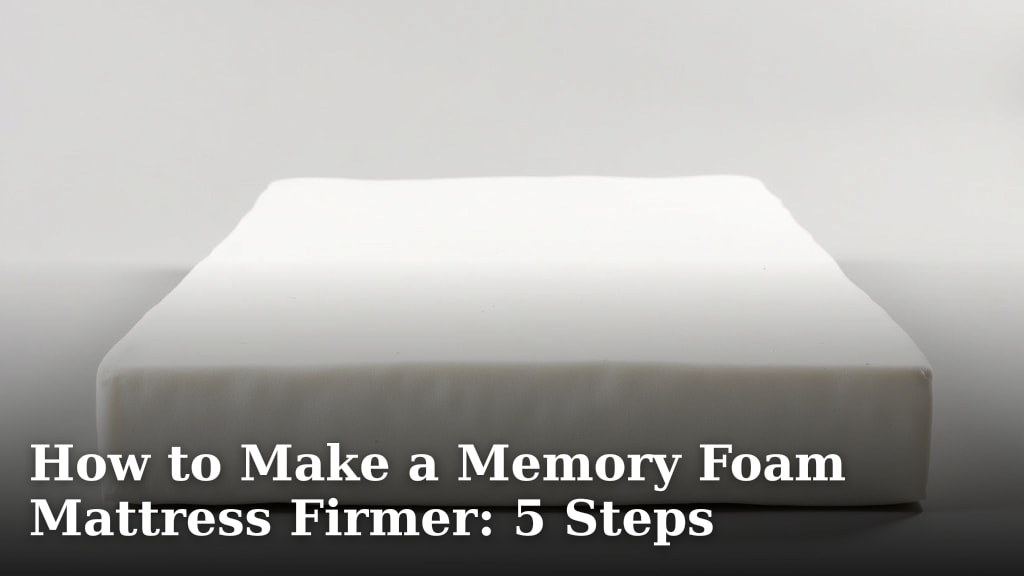
How to Make a Memory Foam Mattress Firmer: 5 Steps
You can make a memory foam mattress firmer by adding a supportive layer on top. This is often done with a high-density foam topper or by placing a plywood board beneath the mattress. Sometimes, simply ensuring your mattress is on a firm, supportive foundation can make a big difference.
If your memory foam mattress feels too soft, you’re not alone. Many people find their once-perfect bed becomes less supportive over time. Thankfully, there are several practical ways to increase its firmness without needing a whole new mattress. We’ve researched the most effective methods to help you get that ideal sleeping surface back.
- Add a firm topper for instant firmness.
- Use a plywood board under the mattress.
- Check and reinforce your bed’s foundation.
- Consider mattress-specific firmness adjusters.
- Flip or rotate your mattress if applicable.
Let’s walk through exactly how to make your memory foam mattress feel firmer, step by step.
So, your beloved memory foam mattress has started to feel a bit like a deflated soufflé? You know, the kind that used to cradle you perfectly but now feels a little too soft, maybe even causing some aches and pains? Don’t worry, you’re not stuck with a mattress that’s lost its mojo. There are several effective strategies you can try right at home to bring back that supportive, firmer feel. We’ve gathered some of the most practical solutions to help you transform your sleep experience without breaking the bank on a new mattress.
Making Your Memory Foam Mattress Firmer: A Practical Guide
You can add firmness to a memory foam mattress by reinforcing its support from underneath or by adding a firm layer on top. Sometimes, the solution is as simple as checking the bed frame.
1. The Power of the Topper: Adding a Firm Layer
This is often the quickest and most straightforward method. A high-density foam topper can significantly change how your mattress feels. Think of it like adding a sturdy foundation to a slightly wobbly table.
Choosing the Right Topper
Not all toppers are created equal. For firmness, you’ll want to look for toppers made from materials like high-density memory foam or even latex. These materials are naturally more resistant to sinking than softer foams.
When you’re shopping, pay close attention to the density rating. Higher density generally means more support and less sinking. We found that toppers with a density of 4 to 5 pounds per cubic foot or higher are typically a good bet for adding firmness.
Also, consider the thickness. While a thicker topper might seem like it would add more firmness, a too-thick, softer topper could actually make things worse. For firmness, a 2 to 3-inch thick topper is usually the sweet spot. Anything more might introduce too much give.
How to Place Your Topper
Simply unroll your new topper and place it directly on top of your existing mattress. Then, put your fitted sheet over both the mattress and the topper. It’s that easy! Make sure the topper is centered and fits snugly to avoid any bunching or shifting during the night.
Many people find this method provides an immediate improvement in support. It’s like giving your mattress a firm hug every night.
2. The Plywood Solution: Reinforcing from Below
This is a more DIY approach, but it can be surprisingly effective. Placing a thin sheet of plywood or a sturdy board underneath your mattress can create a solid, unyielding surface. This prevents the mattress from sagging into any gaps in your bed frame.
What Kind of Plywood to Use
You’ll want to use a half-inch to three-quarter-inch thick plywood. Make sure it’s sturdy and doesn’t have any large knots or weak spots that could snap under pressure. Cut the plywood to the exact dimensions of your mattress. This ensures it fits neatly and doesn’t create any awkward edges.
You can find plywood at most hardware stores. If you’re not comfortable cutting it yourself, many stores offer cutting services for a small fee. Just bring them the measurements!
Implementing the Plywood Layer
First, you’ll need to remove your mattress from the bed frame. Then, lay the cut plywood sheet directly onto the slats or platform of your bed frame. Ensure it covers the entire surface evenly. Once the plywood is in place, carefully place your mattress back on top of the plywood. Finally, put your fitted sheet back on.
This method essentially creates a solid, unbendable base for your mattress. It stops the mattress from conforming to any dips or unevenness in your bed frame, offering a much firmer sleeping surface. It’s like giving your mattress a brand-new, super-solid floor to rest on.
3. Inspecting Your Bed Foundation: The Bed Frame Matters
Sometimes, the issue isn’t the mattress itself, but rather the support system underneath it. A weak or inadequate bed frame can cause your memory foam mattress to sag, making it feel softer than it is.
Checking for Sagging or Weakness
Take a close look at your bed frame. Are the slats spaced too far apart? Are they bending or broken? Many memory foam mattresses require slats that are no more than 3 inches apart. If your slats are farther apart, your mattress can sink between them, leading to a loss of firmness.
You might notice visible sagging in the center of the frame. This is a clear sign that your foundation needs reinforcement or replacement. Experts at the Sleep Foundation often point out that proper bed support is key to mattress longevity and feel.
Reinforcing Your Existing Frame
If your slats are the culprit, you can add more slats. Measure the distance between your existing slats and purchase additional wooden boards or even a piece of sturdy plywood to fill the gaps. Place these new supports between the existing ones, ensuring the spacing is consistent and no more than 3 inches apart.
For metal frames, check if there are crossbars supporting the slats. If not, adding a few extra crossbars can significantly increase stability. You can also purchase bed frame support systems or center support legs that attach to the frame to provide extra stability.
4. Mattress Firmness Adjusters: A Targeted Approach
Did you know there are products designed specifically to adjust mattress firmness? These are often called mattress adjusters or firmness enhancers. They are a more niche solution but can be very effective for specific problem areas.
How Mattress Adjusters Work
These devices typically work by being placed under the mattress in areas where you feel you need more support. They are often made of dense materials that provide a firmer, more compact layer. Some are adjustable, allowing you to customize the level of firmness added.
We found that these can be particularly useful if only a specific part of your mattress feels too soft, like the middle or a particular edge. They offer a targeted solution without needing to modify the entire mattress or bed frame.
Where to Find and Use Them
You can find these adjusters online or at specialty bedding stores. They come in various shapes and sizes. Some are full-sheet designs, while others are smaller pads meant for specific spots.
To use them, simply lift your mattress and place the adjuster according to the product’s instructions. Usually, this means placing it in the area where you want more firmness. Then, lay your mattress back down. It’s a convenient way to fine-tune your mattress’s feel.
5. Flipping or Rotating Your Mattress: A Maintenance Check
While many modern memory foam mattresses are designed to be used on one side only, some older or differently constructed models can be flipped or rotated. This can sometimes help redistribute wear and potentially restore some firmness.
Can Your Mattress Be Flipped?
Check the tag on your mattress. If it says “Do Not Flip” or shows a graphic with a single sleep surface, then you should only rotate it. If it doesn’t have this warning, it might be a “flippable” mattress, meaning it has comfort layers on both sides.
If your mattress is flippable, rotating it head-to-foot might help even out the wear. If it can be flipped, sleeping on the other side might offer a firmer feel, especially if the original side has softened significantly.
The Rotation and Flipping Process
Rotating your mattress means moving it 180 degrees so that the head of the mattress is where the foot used to be. Flipping involves turning the entire mattress over.
This is a great time to check the condition of your mattress overall. If you notice significant dips or body impressions, even flipping or rotating might not fully restore the firmness. In such cases, a topper or a new foundation might be a better long-term solution. This is more of a maintenance step than a guaranteed fix for a significantly softened mattress.
Here’s a quick rundown of what you can do:
- Assess your bed frame for any signs of weakness or excessive slat spacing.
- Consider a high-density foam topper for an immediate firmness boost.
- Try placing a plywood board under your mattress for solid support.
- Look into mattress firmness adjusters for targeted support.
- Rotate or flip your mattress if its construction allows.
Conclusion
You’ve learned that a too-soft memory foam mattress doesn’t have to mean a new purchase. By adding a firm topper or a sturdy plywood layer, you can instantly boost support. Don’t forget to check your bed frame’s foundation and consider specialized firmness adjusters for a targeted fix. Even rotating your mattress can help if its design allows.
The key is to identify the source of the softness, whether it’s the mattress itself or its support system. Take a moment to assess your current setup. Then, choose the method that best suits your needs to reclaim a firmer, more restful sleep. Start by checking your bed frame’s stability today!
Frequently Asked Questions
Will a topper really make my memory foam mattress feel much firmer?
Yes, a high-density foam or latex topper can significantly increase firmness. Look for toppers with a density of 4-5 pounds per cubic foot or higher and a thickness of 2-3 inches. This provides an immediate, noticeable difference in support.
Is the plywood method safe for my mattress and bed frame?
The plywood method is generally safe if done correctly. Ensure the plywood is the right thickness (half-inch to three-quarter-inch) and cut to size. This creates a solid base, preventing the mattress from sagging and potentially prolonging its life.
How do I know if my bed frame is the reason my mattress feels soft?
Inspect your bed frame for sagging slats or excessive spacing between them (more than 3 inches). If you notice these issues, your frame is likely not providing adequate support. This allows the mattress to sink, making it feel softer than it is.
Can mattress firmness adjusters damage my mattress?
No, mattress firmness adjusters are designed to be placed under the mattress and should not cause damage. They offer a supportive layer without altering the mattress structure. Always follow the manufacturer’s instructions for placement.
Is it better to use a topper or a plywood board for firmness?
A topper offers a softer feel on top of your mattress, while plywood creates a rigid base underneath. If your mattress itself is sagging internally, plywood might be more effective. If you want to change the surface feel, a firm topper is a good choice.