Innerspring Mattress vs Hybrid: Support Compared
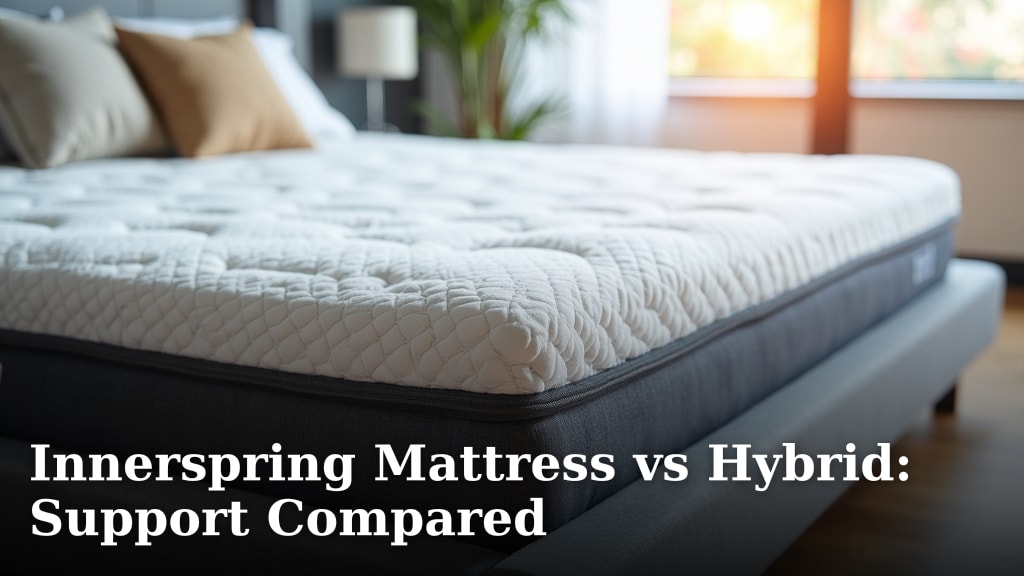
When comparing an innerspring mattress vs hybrid for support, hybrid mattresses generally offer a more balanced and responsive support system. While innerspring mattresses provide traditional bouncy support, hybrids combine coils with foam layers for enhanced contouring and pressure relief, adapting better to your body’s shape.
Choosing the right mattress means understanding how each type supports you through the night. Many sleepers find that hybrid mattresses excel in targeted support, making them great for various sleeping positions. Innerspring mattresses, on the other hand, are often preferred for their firm feel and excellent airflow, which can be ideal for back sleepers or those who sleep hot.
- Hybrid mattresses offer a blend of coil support and foam comfort.
- Innerspring mattresses provide traditional, firm coil support.
- Hybrids often have better pressure relief and contouring.
- Innersprings are known for their bounciness and breathability.
- Your preferred sleeping position can influence which offers better support.
Let’s walk through how innerspring and hybrid mattresses stack up in terms of support, so you can make an informed decision for your best sleep.
Comparing Support: Innerspring Mattresses vs. Hybrids
When you’re searching for a new mattress, understanding how different types provide support is key. We’ll break down the core mechanics of innerspring and hybrid mattresses, so you can see which one aligns with your body’s needs and sleeping style. New to the categories? Start with the main types of mattresses.
How Innerspring Mattresses Provide Support
Innerspring mattresses are built around a core of metal coils. This design has been around for a long time, and for good reason: it offers a very distinct feel. The support you get is primarily from these springs, which push back against your body weight, a contrast we explore fully in innerspring versus memory foam.
The Coil System in Innerspring Mattresses
The type and arrangement of coils make a big difference in how an innerspring mattress supports you. You’ll typically find a few main types of coils:
- Bonnell Coils: These are hourglass-shaped, tied together, and quite common. They offer a generally firm and responsive feel.
- Offset Coils: Similar to Bonnell but with squared-off tops, they hinge under pressure for a slightly more conforming feel than Bonnell.
- Continuous Coils: Made from a single piece of wire woven into rows. They are very durable and offer uniform support across the bed.
Each coil type contributes to the overall firmness and how the mattress reacts to your body. Generally, innerspring beds offer a bouncy and firm sleep surface. This can be great if you like feeling “on top” of your mattress rather than sinking into it.
The Feel of Innerspring Support
The primary support of an innerspring comes from its push-back. When you lie down, the coils compress, then push back to support your weight. This creates that classic springy, responsive feel. It’s often favored by those who enjoy a firmer bed and easy movement throughout the night.
For back sleepers, the firm, even support can be a real benefit. Your spine tends to stay well-aligned, preventing that “hammock” feeling. Stomach sleepers might also appreciate the firmness, as it helps keep hips from sinking too far down (Cleveland Clinic).
How Hybrid Mattresses Provide Support
Now, let’s talk about hybrids. Imagine taking the best parts of an innerspring and blending them with the best parts of a foam mattress. That’s essentially what a hybrid does. It combines a coil support core with multiple layers of foam.
The Hybrid Coil Core: Pocketed Coils
One of the biggest differences in a hybrid’s support system is the type of coil used. Most hybrids feature pocketed coils (also known as individually wrapped coils). What does this mean for you?
- Reduced Motion Transfer: Each coil moves independently. So, if your partner tosses and turns, you’re less likely to feel it.
- Targeted Support: Because coils move on their own, they can contour more closely to your body’s unique shape. This means better support for your curves.
- Enhanced Pressure Relief: This contouring works with the foam layers to distribute your weight more evenly, reducing pressure points.
This intelligent coil system is a major reason why hybrids often feel more sophisticated in their support than traditional innersprings.
The Role of Foam Layers in Hybrid Support
The foam layers in a hybrid aren’t just for comfort; they play a crucial role in support too. These layers can be made from memory foam, latex, or proprietary blends, and the difference between memory foam and poly foam shapes how a hybrid feels. They work in tandem with the coils to:
- Cradle Your Body: The foam conforms to your curves, filling in gaps like your lumbar region, which can be vital for spinal alignment.
- Absorb Pressure: Foam layers help cushion shoulders, hips, and knees, areas that often bear the most weight.
- Provide Zoned Support: Some hybrids feature different foam densities or coil arrangements in specific areas (like firmer coils under your hips and softer ones under your shoulders) for even more targeted support.
This combination creates a feeling of being both supported and cushioned, a balance many sleepers seek.
Direct Comparison: Support Mechanics
Let’s put them side-by-side to highlight the core differences in how they support your body.
| Feature | Innerspring Mattress | Hybrid Mattress |
|---|---|---|
| Primary Support Element | Connected coil unit (Bonnell, offset, continuous) | Individually pocketed coils |
| Contouring Ability | Minimal, pushes back as a unit | High, coils and foam conform to body shape |
| Pressure Relief | Generally less, can create pressure points | Excellent, due to foam layers and conforming coils |
| Motion Isolation | Poor, motion transfers easily | Good, isolated coils minimize transfer |
| Support Feel | Bouncy, firm, “on top” sensation | Balanced, responsive, cushioned, “in the mattress” feel |
| Spinal Alignment | Good for back/stomach if firm enough | Excellent, adapts to natural spinal curves |
Support for Different Sleeping Positions
Your preferred sleeping position greatly influences which mattress type will give you the best support. Think about how your body naturally rests.
Side Sleepers
If you sleep on your side, you need a mattress that can cushion your shoulder and hip. These areas press into the mattress the most. Innerspring mattresses, especially firmer ones, might create pressure points here. Hybrids, with their conforming foam layers and pocketed coils, generally offer superior pressure relief for side sleepers, allowing your spine to stay aligned without putting stress on your joints. That alignment is really about support, which is different from firmness.
Back Sleepers
Back sleepers often do well with both types, depending on preference. An innerspring can provide a nice flat, firm surface that keeps the spine straight. However, a hybrid can offer the same spinal alignment but with added contouring for the natural curve of your lower back. This can prevent gaps and provide more consistent support along the entire length of your spine.
Stomach Sleepers
For stomach sleepers, the biggest concern is usually keeping the hips from sinking too far down, which can strain the lower back. A firmer surface is often preferred. Traditional innersprings can provide this firmness well. Some hybrids also offer firmer options, especially those with denser base foams or firmer coils, ensuring your body stays on a relatively flat plane.
Key Support Considerations for Your Choice
When you’re trying to decide, ask yourself these questions about support:
- Do you prefer a feeling of being hugged by your mattress or floating on top?
- Do you often wake up with aches in your hips, shoulders, or lower back?
- Does your partner’s movement disturb your sleep?
- Do you need extra support for specific body parts due to pain or injury?
- How important is maintaining a neutral spinal alignment throughout the night?
Answering these can really help you narrow down your options and focus on the support characteristics that matter most to you (NIH).
When an Innerspring Might Offer Better Support
While hybrids are often touted for their advanced support, there are situations where a classic innerspring might be exactly what you need:
- You love a very traditional, firm, bouncy feel.
- You sleep primarily on your back or stomach and prefer a very flat surface.
- You tend to sleep hot and prioritize maximum airflow for a cooler sleep.
- You need very strong edge support for getting in and out of bed.
For some, the straightforward push-back of an innerspring is precisely the kind of support that feels right.
When a Hybrid Might Offer Better Support
On the flip side, hybrids often shine when you need a more tailored support experience:
- You’re a side sleeper and need excellent pressure relief.
- You share your bed and want minimal motion transfer.
- You experience back pain and need contouring support for spinal alignment.
- You want a bed that adapts to different sleeping positions throughout the night.
- You enjoy the benefits of foam (like pressure relief) but also want the responsive feel of coils.
Many sleepers find the adaptive nature of hybrid support to be a game-changer for their sleep quality.
Conclusion
When you weigh an innerspring mattress vs hybrid for support, your personal sleep needs are the ultimate decider. Innerspring mattresses offer that classic firm, bouncy feel, excellent for those who sleep on their back or stomach and prefer to feel “on top” of the bed. Hybrid mattresses provide a more adaptive, contouring support, blending the responsiveness of coils with the pressure relief of foam, which is often ideal for side sleepers or those needing targeted comfort.
Think about your body’s specific needs, your sleeping position, and any common aches, then use our guide to picking firmness without guessing to zero in. Test out both types if you can. Your perfect mattress is the one that supports your body best for truly restorative sleep.
Frequently Asked Questions
Are hybrid mattresses always better for back pain support than innerspring?
Not always. While hybrids often offer superior contouring that can alleviate back pain, a firm innerspring might provide sufficient support for some back sleepers by keeping the spine straight. It really depends on the individual’s specific type of back pain and preferred firmness level. You’ll want to choose a mattress that keeps your spine in neutral alignment.
Does a higher coil count always mean better support in both innerspring and hybrid mattresses?
Not necessarily. While coil count is a factor, the quality, gauge, and type of coils used are often more important for support. For instance, individually pocketed coils in a hybrid can offer more targeted support than a higher number of connected coils in an innerspring. Always consider the overall construction, not just a single number.
Can an innerspring mattress offer good pressure relief for side sleepers?
Generally, traditional innerspring mattresses are not ideal for side sleepers seeking significant pressure relief. Their interconnected coils tend to push back uniformly, which can create pressure points at the shoulders and hips. Hybrids, with their foam layers and conforming pocketed coils, typically perform much better for side sleepers.
How does edge support compare between innerspring and hybrid mattresses?
Edge support can vary in both types. Many innerspring mattresses naturally have good edge support due to their connected coil systems. Hybrids often feature reinforced edges, either with denser foam or stronger coils around the perimeter, to prevent sagging when you sit or sleep near the edge. Check specific model features for the best edge support.
Will a hybrid mattress feel much softer than an innerspring because of the foam layers?
Not always. While hybrids incorporate foam, they come in a wide range of firmness levels, from very soft to very firm. The firmness of a hybrid depends on the type, density, and thickness of its foam layers, as well as the coil system. You can find firm hybrids that offer excellent support without feeling overly soft, balancing cushion with responsiveness.