Do Memory Foam Mattresses Last? Lifespan by Density
Yes, memory foam mattresses can last a long time, often 7-15 years, especially when you understand how density affects their lifespan. A higher density memory foam generally means a more durable mattress that will hold its shape and support longer. So, your investment can definitely provide years of comfortable sleep.
When you’re looking for a memory foam mattress, you’ll see different density ratings. These numbers tell you a lot about how the foam is made and how it will perform over time. We found that density is one of the biggest factors in how long your mattress will feel new and supportive, impacting everything from sinkage to overall longevity.
- Memory foam mattresses can last 7-15 years.
- Higher density foam means a more durable mattress.
- Density impacts support and how long the mattress feels “new.”
- Proper care can extend your mattress’s lifespan.
Let’s dive into what those density numbers really mean for your memory foam mattress and how long you can expect it to keep you sleeping soundly.
How Long Do Memory Foam Mattresses Really Last? Understanding the Lifespan of Your Mattress
So, you’re curious about how long that comfy memory foam mattress will actually keep you sleeping soundly. You’ve probably heard they can be a great investment, but will it hold up over time? We’ve looked into it, and the answer is a pretty solid yes, memory foam mattresses can last a good while.
Generally speaking, you can expect a quality memory foam mattress to last anywhere from 7 to 15 years. Think of it like a good pair of shoes; with proper care, they can go the distance. But just like shoes, some are built better than others, and that’s where a key factor comes into play: density.
The Density Factor: What Does It Mean for Your Mattress?
When you shop for memory foam, you’ll often see numbers attached to it, like 4lb or 5lb. These numbers aren’t just random; they refer to the density of the foam. This is measured in pounds per cubic foot, meaning how much a one-foot by one-foot by one-foot cube of that foam weighs.
Why does this matter for your mattress’s lifespan? Well, a higher density means the foam has more material packed into that cubic foot. We found that this extra material generally translates to a more supportive and durable mattress. It’s like comparing a dense sponge to a lighter, airier one. The denser one will bounce back better and hold its shape longer.
Breaking Down Memory Foam Density Ratings
We’ve seen a few common ranges when it comes to memory foam density. Understanding these can help you gauge the quality and expected longevity of the mattress you’re considering.
Low-Density Foams (Under 4 lb/ft³)
Foams in this range are often found in budget-friendly mattresses or as comfort layers in hybrid models. They tend to be lighter and can feel softer initially. However, research shows they may break down faster. You might notice quicker sagging or a loss of support within a few years.
Medium-Density Foams (4-5.5 lb/ft³)
This is often considered the sweet spot for many memory foam mattresses. We found that foams in this density range offer a good balance of comfort, support, and durability. They tend to last longer than lower-density options, often providing a good 7-10 years of reliable sleep.
High-Density Foams (Over 5.5 lb/ft³)
When you’re looking for maximum durability and support, higher-density foams are usually the way to go. These are the workhorses. We found that they are less likely to sag and will maintain their supportive qualities for a longer period, often pushing the lifespan towards the 10-15 year mark, sometimes even more.
How Density Directly Impacts Mattress Longevity
So, how does that density number actually translate into years of good sleep? It’s all about how the foam behaves under pressure and over time. We found that higher density foams have a more resilient structure. This means they can withstand the repeated pressure of your body every night without collapsing easily. Understanding memory foam density is crucial for mattress durability.
Think about it this way: a low-density foam is like a puffy marshmallow. It feels nice at first, but if you press on it repeatedly, it might get squashed and stay that way. A high-density foam is more like a dense cake. It still has give, but it springs back better and holds its structure longer, even with daily use (Sleep Foundation).
We also found that density plays a role in how well the mattress retains its contouring ability. While all memory foam is known for that “hugging” sensation, high-density foams can often maintain this feature for longer without developing permanent body impressions.
The Lifespan of Different Types of Memory Foam
It’s not just about density; the type of memory foam also matters. Different formulations can affect how the mattress performs and how long it lasts. We’ve seen that manufacturers use various technologies to enhance memory foam’s properties.
Traditional Viscoelastic Memory Foam
This is the classic memory foam. Its lifespan is heavily dependent on its density, as we discussed. For a good quality traditional memory foam mattress with a density of 5lb/ft³ or higher, you can typically expect 7-12 years of good service.
Open-Cell Memory Foam
Manufacturers developed open-cell structures to make memory foam more breathable. This design has tiny air pockets that allow air to flow through. We found this can improve cooling and responsiveness. In terms of lifespan, it’s comparable to traditional memory foam of similar density, often in the 7-10 year range, assuming good density (Cleveland Clinic).
Gel Memory Foam
Gel memory foam is essentially traditional memory foam infused with gel particles, or the gel is swirled into the foam during manufacturing. The gel is designed to help dissipate heat. While this improves comfort, we found that the core durability still comes down to the foam’s density. A gel memory foam with a density of 5lb/ft³ or more can realistically last 8-13 years.
Copper-Infused or Other Specialty Foams
These are newer innovations. Copper is often added for its antimicrobial properties and potential to help with heat dispersion. Other infusions might aim for enhanced cooling or support. We found that the lifespan here is still primarily dictated by the density of the base memory foam material. If the underlying foam is high-density, you can expect a similar longevity to high-density traditional memory foam, potentially 10-15 years.
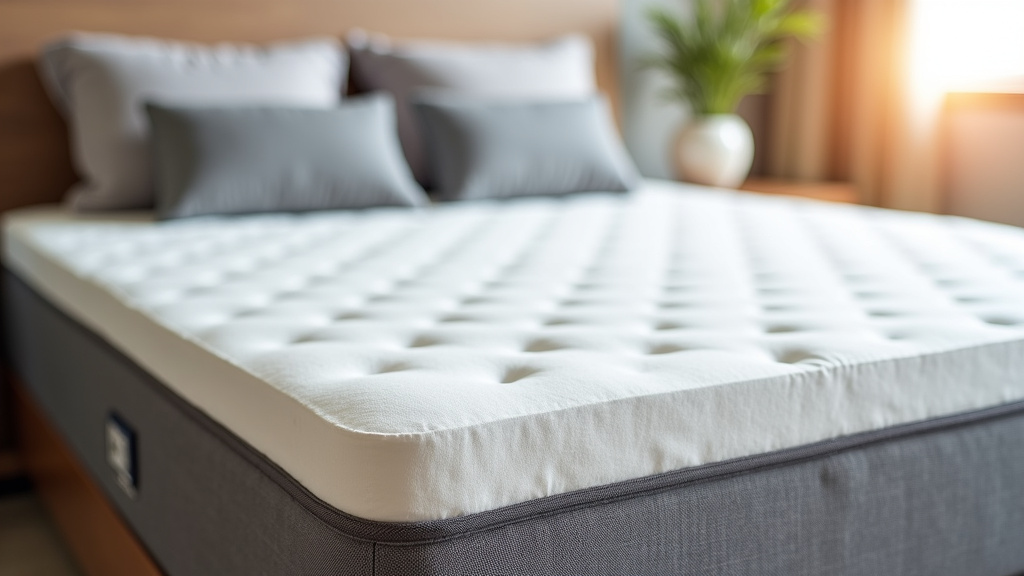
Table: Memory Foam Density and Expected Mattress Lifespan
To give you a quick overview, here’s a general guide based on our findings. Keep in mind these are estimates, and actual lifespan can vary.
| Foam Density (lb/ft³) | Typical Lifespan (Years) | General Feel/Use |
|---|---|---|
| < 4 | 3-7 | Budget mattresses, comfort layers; may sag sooner. |
| 4 – 5.5 | 7-10 | Good balance of comfort and durability; common in many mid-range options. |
| 5.5 – 6.5 | 10-13 | Excellent durability and support; found in higher-quality mattresses. |
| > 6.5 | 12-15+ | Very high durability, firm support; premium options and commercial use. |
Factors Beyond Density That Affect Mattress Lifespan
While density is a major player, it’s not the only thing that determines how long your memory foam mattress will last. Other factors contribute to its overall health and longevity.
Mattress Construction and Quality of Materials
We found that not all foams are created equal, even within the same density rating. The quality of the raw materials used and the manufacturing process play a significant role. A mattress with multiple layers of high-quality foam will generally outlast one with lower-grade materials, even if the densities seem similar on paper.
The foundation layer is also critical. A robust base foam ensures the entire mattress structure is well-supported. If the base layer is weak, the entire mattress will suffer, regardless of how dense the comfort layers are (Sleep Foundation).
Your Sleeping Habits and Body Weight
How you use your mattress can impact its lifespan. Heavier individuals will naturally put more pressure on the foam. While higher-density foams handle this better, consistent heavy use will still affect any mattress over time. We found that sleeping on the same spot every night can also lead to uneven wear.
Rotating your mattress regularly can help distribute wear more evenly. If you’re a heavier sleeper, opting for a higher-density foam is a wise choice to maximize longevity and maintain consistent support.
Proper Support System
The base your mattress rests on is incredibly important. Memory foam needs a solid and consistent support system. A slatted foundation with slats spaced no more than 2-3 inches apart is generally recommended (Mayo Clinic).
Using a box spring designed for traditional innerspring mattresses is usually not ideal for all-foam memory foam mattresses. The gaps in a traditional box spring can lead to premature sagging and damage the foam. We found that using the wrong base can significantly shorten your mattress’s lifespan, even if it’s a high-density model.
Environmental Factors
Where you keep your mattress matters too! Extreme temperatures and humidity can affect the foam’s integrity over time. We found that keeping your mattress in a climate-controlled room helps preserve its materials. Excessive moisture can lead to mold or mildew, which will definitely shorten its life and affect its feel.
Extending the Life of Your Memory Foam Mattress
Want to get the most mileage out of your memory foam mattress? A few simple steps can make a big difference. It’s all about taking good care of your investment.
- Rotate your mattress every 3-6 months. This helps ensure even wear and prevents one area from compressing more than others.
- Use a mattress protector. This is a must-have! It shields your mattress from spills, sweat, and dust mites, keeping it cleaner and healthier.
- Ensure proper foundation support. As we mentioned, a good base is crucial. Make sure your bed frame or foundation provides adequate, consistent support.
- Vacuum your mattress periodically. This removes dust and allergens, keeping the surface clean and fresh.
- Avoid jumping or standing on the edges. This can damage the foam structure and weaken the perimeter support.
- Follow manufacturer cleaning instructions. Different foams might have specific care needs.
By following these tips, you can help ensure your memory foam mattress continues to provide comfortable and supportive sleep for its full expected lifespan, often well over a decade for quality, higher-density models.
Conclusion
You’ve learned that memory foam mattresses can be a smart, long-lasting investment, typically offering 7-15 years of comfort. The key to maximizing this lifespan lies in understanding foam density. Higher density foams, generally above 5.5 lb/ft³, provide superior durability and support, holding their shape longer and resisting sag. While other factors like construction quality and proper care play a role, choosing a mattress with a suitable density for your needs sets you up for years of restful sleep. Take this knowledge with you to find a memory foam mattress that will serve you well.
Frequently Asked Questions
Will a higher density memory foam mattress feel too firm?
Not necessarily. While higher density foams offer more support and durability, they still provide the signature conforming feel of memory foam. Manufacturers often balance density with different comfort layers to achieve a desired firmness level. You can still find plush, medium, or firm options even with higher-density foams.
Can I extend the life of my current memory foam mattress if it’s a lower density?
Yes, you can certainly help extend its life! Even lower-density foams benefit greatly from consistent care. Rotating your mattress regularly, using a quality mattress protector, and ensuring it has a strong, supportive foundation can help prevent premature sagging and wear, maximizing its comfort for as long as possible.
Does the gel or copper infusion affect the lifespan of memory foam?
These infusions primarily affect temperature regulation and antimicrobial properties, not the foam’s structural lifespan. The core durability of gel-infused or copper-infused memory foam still comes down to the density of the base foam. A higher density in the underlying material will still lead to a longer-lasting mattress.
How do I know the density of a memory foam mattress if it’s not listed?
Many manufacturers list the density, often near the material details or specifications. If it’s not readily available, look for reviews that mention density or contact the retailer directly. Generally, mattresses priced very low or described as “ultra-plush” might use lower-density foams, while premium models tend to highlight their higher densities.
What are the first signs that my memory foam mattress is wearing out?
You’ll often notice the first signs as a loss of support or unevenness. This can manifest as persistent sagging in certain areas where you sleep, or the edges of the mattress might start to feel less supportive. You might also find that the “hug” or conforming feel diminishes over time.